Why Bali Villas Need Filtration
Understanding Bali's Water Quality
Most Bali villas run on private bore wells or limited PDAM mains. Neither delivers drinking-quality water without treatment — here is why.
Updated July 2026: through the mid-year dry season the water table across the Canggu and Bukit villa belts drops and dissolved minerals concentrate, so many wells are testing higher for TDS and hardness right now than they do in the wet months — a good time to have your source water checked. Free on-site TDS testing continues on every visit.
If you have just moved into a villa in Canggu, Seminyak, Ubud or Uluwatu, the water coming out of your taps almost certainly came from a deep bore well on the property. Across the island, fewer than half of residential properties are connected to the PDAM municipal network, and in the popular villa belts of Berawa, Pererenan and Bukit the figure is far lower. Bore well water is drawn straight from the aquifer with no treatment at all. It may look perfectly clear, but clarity tells you nothing about what is dissolved in it.
We measure three things on every site visit, and almost every Bali well shows a problem in at least one of them. The first is total dissolved solids (TDS) — the concentration of dissolved minerals, salts and metals. Bali wells typically read between 200 and 800 ppm; the World Health Organization considers water above 600 ppm noticeably unpalatable, and coastal wells near Jimbaran, Sanur and parts of Nusa Dua can run higher still because of seawater intrusion into the aquifer. The second is hardness — calcium and magnesium from the island's limestone. Hard water leaves white scale on shower screens, furs up kettles and water-heater elements, and shortens the life of every appliance that heats water. The third, and the one owners worry about most, is biological contamination: E. coli and other bacteria from septic seepage and agricultural runoff that infiltrate shallow aquifers, especially during the wet season from November to March.
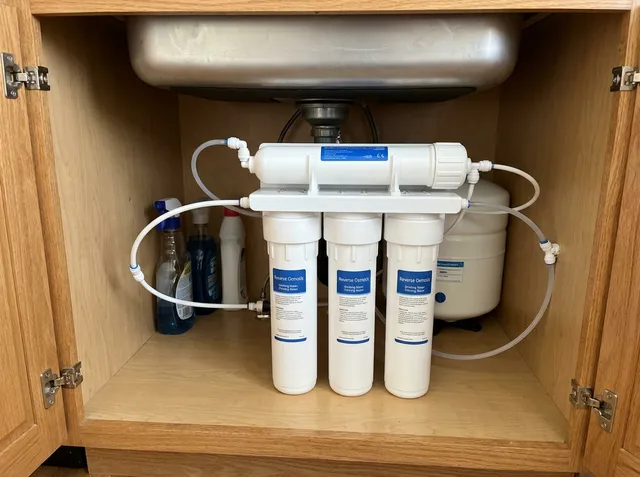
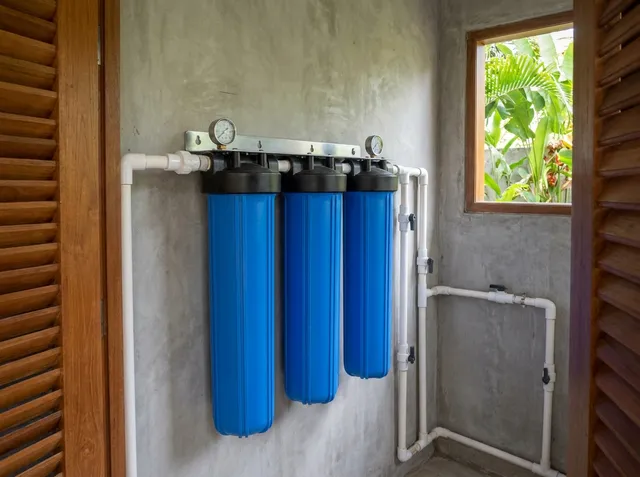
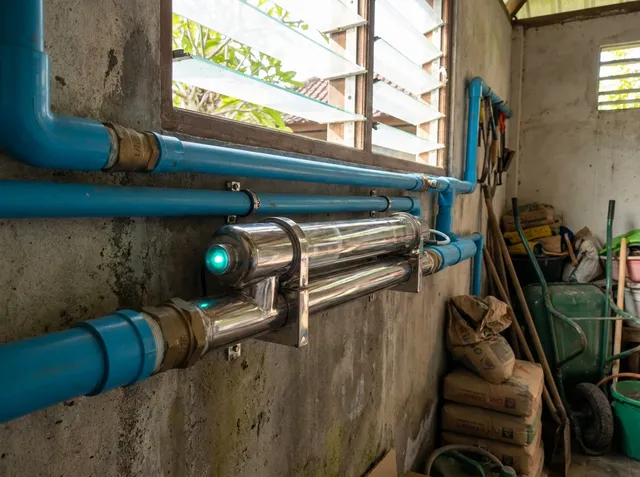
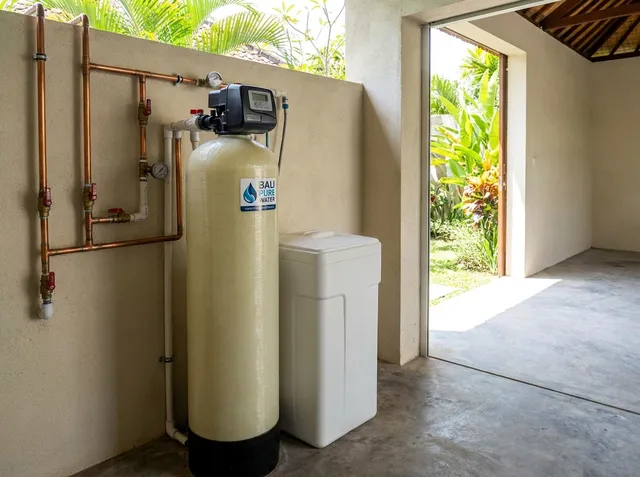
A single product rarely fixes all three. High TDS calls for reverse osmosis; biological risk calls for UV sterilisation; scale calls for a softener or scale inhibitor. That is why we test first and recommend second — a TDS meter reading and a hardness test take ten minutes and tell us exactly which combination of RO, UV, whole-house filtration and softening your property actually needs, rather than selling you a system you do not.
Chlorine is a separate consideration for the minority of villas on PDAM mains. Municipal water is chlorinated for safety in the pipes, but the residual chlorine leaves a swimming-pool taste and dries out skin and hair. A carbon stage in a whole-house filter removes it easily. Whatever your source, the goal is the same: water that is safe to drink straight from the kitchen tap, gentle on your appliances, and free of the bottled-water habit that costs a busy villa household several hundred thousand rupiah a month and fills the bins with plastic.